

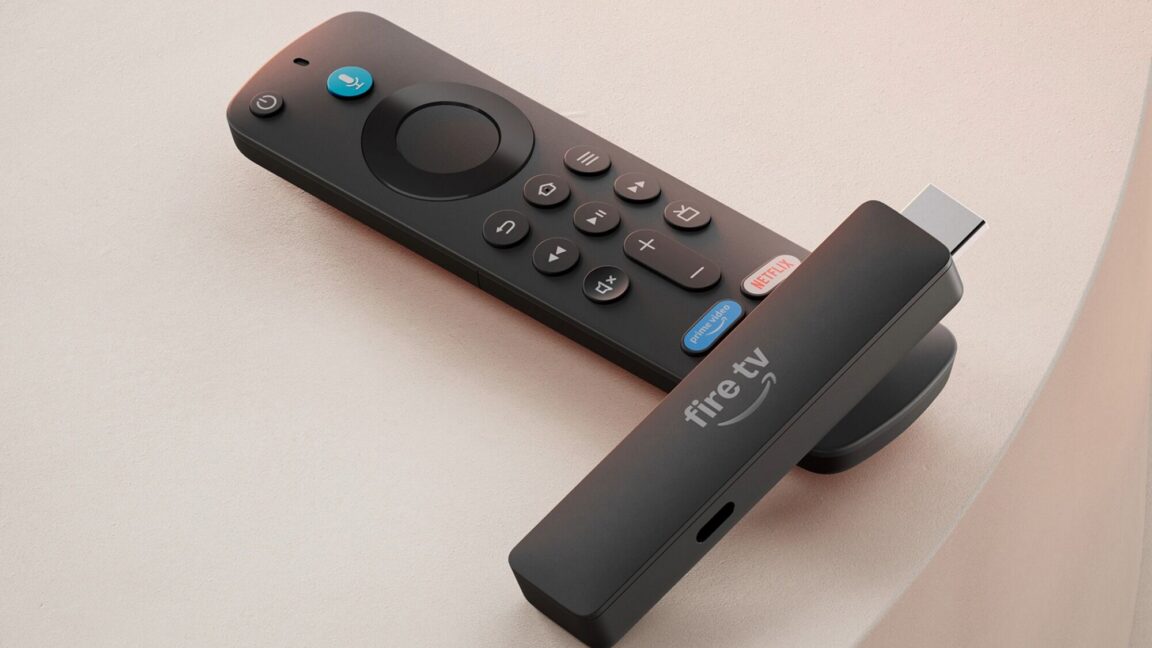
Amazon has officially announced that its newly released Fire TV Sticks will no longer support the sideloading of Android apps or any software from outside of its official app store. This significant change was highlighted in an update on Amazon's developer website, which states that starting with the Fire TV Stick 4K Select, all future Fire TV Stick models will operate on the new Vega OS.
This update has been noted on Amazon's website since at least January, according to the Internet Archive’s Wayback Machine. However, the company has not explicitly communicated this change to consumers, many of whom are only now becoming aware of Amazon's decision to transition to the proprietary Vega OS. After inquiries from a technology publication, Amazon declined to provide further comments on the matter, despite reports from multiple sources indicating that all upcoming Fire TV Sticks will be powered by Vega.
Vega OS is designed to enhance security by not allowing the installation of apps that are not available on the Amazon Appstore. According to Amazon, an app must be published in the Amazon Appstore to be compatible with Vega-powered devices. Users have reported seeing notices on the product page for the newly announced Fire TV Stick HD, stating, “For enhanced security, this device prevents sideloading or installing apps from unknown sources. Only apps from the Amazon Appstore are available for download.”
While Vega devices can still allow sideloading, this is restricted to registered developers, limiting the options available to average consumers. In November 2023, it was reported that the Echo Show 5 was the first device to utilize the new Vega operating system, followed by the Echo Hub released in April 2024. The Fire TV 4K Select, launched in October, marked the introduction of Amazon's first streaming stick powered by Vega.
Earlier statements from Amazon clarified that there are no plans to upgrade existing Fire OS devices to the Vega operating system. This decision to move away from the previous Fire OS has been attributed to the need for more robust control over software and device functionality.
Reasons Behind the Shift to Vega OS
Previously, Amazon’s Fire streaming devices operated on Fire OS, an Android fork based on the Android Open Source Project. This often resulted in older software being used on Fire devices. The transition to the Linux-based Vega OS allows for more modern software capabilities and greater control over how users interact with Fire devices. Notably, Vega OS supports advanced features such as Alexa+, Amazon's generative AI chatbot, while restricting access to apps that may incur costs or facilitate piracy.
Sideloading has been a popular method for users to install applications not found in Amazon’s Appstore, including those from the Google Play Store, and to minimize Amazon's advertising presence. This practice has allowed many users to enhance the functionality of their devices, such as repurposing Fire tablets as smart home controllers. However, Amazon’s concerns primarily revolve around the potential for sideloading applications that enable piracy. As of fall 2023, Amazon began blocking apps that have been blacklisted by the Alliance for Creative and Entertainment, a global anti-piracy organization.
Fire Sticks have faced scrutiny for their potential to facilitate piracy. A report from a leading media and telecommunications research firm indicated that jailbroken Fire Sticks could be responsible for enabling significant streaming piracy, amounting to billions of dollars lost. Amazon has come under increasing pressure to address piracy on its devices from various organizations, including sports networks and leagues.
While many users may not be significantly affected by Amazon's decision to eliminate consumer sideloading on Fire Sticks, those who relied on this feature may be compelled to look for alternative streaming devices or to develop workarounds to maintain their desired functionality.
Source: Ars Technica News